


Barndommens Gade
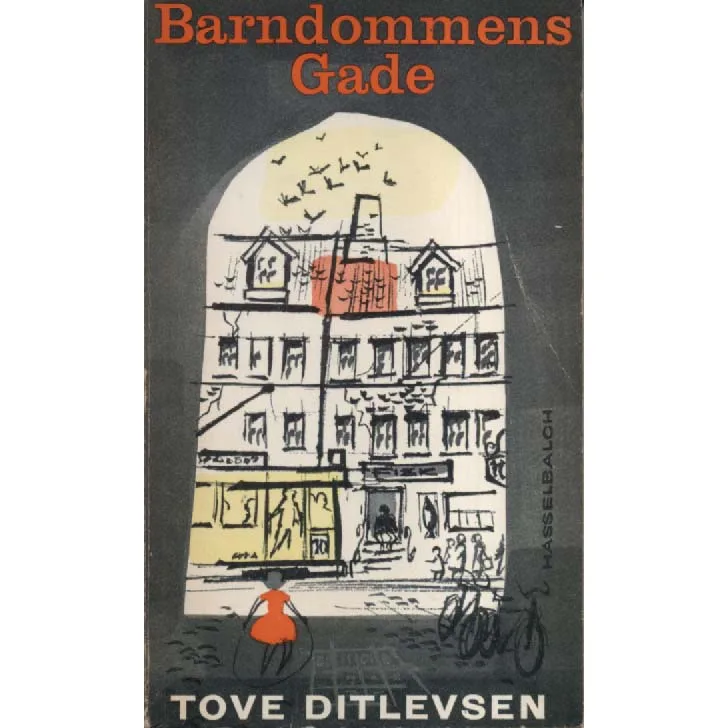
Publisher: Hasselbalch
Format: Paperback
ISBN: none
There are childhood novels that present youth as a magical parade of innocence and discovery, and then there is Tove Ditlevsen quietly wandering into the room with Barndommens Gade (“Childhood Street”) and reminding everyone that growing up is often confusing, lonely, class-conscious and emotionally complicated long before anybody has the vocabulary to explain why.
Which is precisely why she remains brilliant.
Ditlevsen had the rare gift of writing about ordinary lives with such honesty and precision that readers begin to suspect she somehow understood their own childhood better than they do themselves. Her work captures the fragile emotional weather of adolescence and working-class urban life with devastating clarity, all delivered in prose so deceptively simple that one hardly notices the heartbreak sneaking up quietly between sentences.
The title itself sounds gentle and nostalgic: Childhood Street. One imagines cobbled roads, games in courtyards and sentimental memories filtered through soft Scandinavian light. And yes, there is nostalgia here — but the dangerous kind. The sort that remembers not only warmth and familiarity, but also shame, longing, boredom, social anxiety and the terrible awareness children sometimes possess of adult unhappiness long before they understand its causes.
In other words: classic Scandinavian emotional devastation.
Originally published in the 1940s and reissued here in a 1968 Hasselbalch edition, the novel belongs to that remarkable tradition of mid-century European literary realism where writers still trusted quiet observation more than melodrama. Ditlevsen does not need dramatic twists or cinematic explosions. She can dismantle your emotional stability merely by describing a girl walking home through Copenhagen wondering whether she belongs anywhere.
Naturally, modern readers discovering Ditlevsen often react with a sort of startled recognition. Beneath the period detail and old Copenhagen atmosphere lies something startlingly contemporary: insecurity, identity, loneliness, class tension and the exhausting performance of trying to become oneself while surrounded by the expectations of others. Long before social media encouraged everyone to curate their personalities, Ditlevsen already understood how fragile and constructed identity could feel.
The physical edition itself carries that wonderful aura of mid-century Scandinavian publishing. Restrained design, thoughtful typography and no desperate attempts to market the book as “gripping.” Publishers once apparently believed readers might simply encounter literature quietly and emerge transformed without needing endorsements from celebrities or twelve quotes comparing everything to The Girl with the Dragon Tattoo.
There is also something deeply ironic about these once-common Danish literary paperbacks becoming obscure treasures abroad. At one time, Barndommens Gade would simply have been part of cultural life: serious literature read by ordinary people on trains, in flats and during long winters. Now it survives as an elegant artefact from a slower intellectual world where novels about inner life and social observation still occupied a central cultural place.
Condition-wise, this copy is listed as Good, meaning it has survived admirably despite decades of probable ownership by students, readers, intellectuals and people quietly processing their own childhood memories while underlining passages in pencil. One suspects it may have spent years beside coffee cups, rainy windows and conversations about literature that lasted far longer than modern attention spans generally allow.
Today, Barndommens Gade stands as both literary classic and emotional time machine: a beautifully observed portrait of childhood, memory and urban life from one of Denmark’s finest writers. It is tender, melancholic, intelligent and quietly ruthless in its honesty — rather like childhood itself, really.
An excellent acquisition for lovers of Scandinavian literature, literary realism, psychologically sharp fiction or anyone who suspects the streets we grow up on never entirely leave us, no matter how sophisticated we later pretend to become.
Keep browsing: See more Danish books Other books by Tove Ditlevsen
